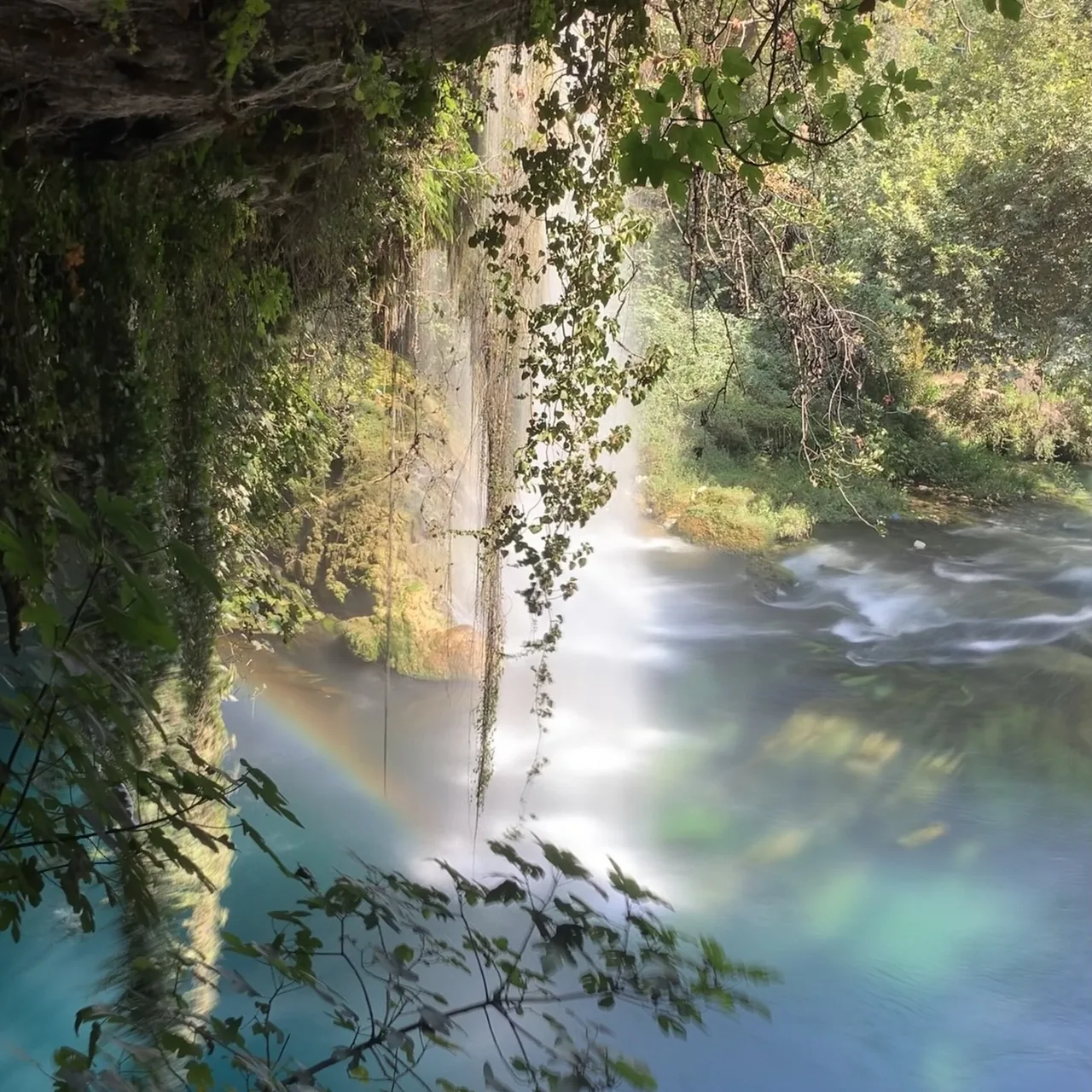
Spring and autumn can be comfortable seasons for walking. Strong flow is not guaranteed in any month; check recent conditions at Upper Düden before a summer visit.
A seasonal suggestion is not a flow guarantee
Flow depends on rainfall, water sources and water management. A DHA report dated 16 July 2023 describes a substantial difference between winter and that summer. It is not a daily reading for 2026 or a repeating annual monthly calendar. We do not present those old numbers as today’s conditions.
In summer, choose cooler hours
Water, sun protection and breaks help in Antalya’s heat. The exposed Lower coast feels different from the partly shaded Upper park. If choosing an early morning or late afternoon visit, check Upper Düden’s admission hours separately. Cooler weather does not mean the attraction is open.
Rain and photographic light
Cloud can soften harsh shadows, while wet stone reduces grip. Take care around the cave and cliff paths. For a boat trip, check sea and wind conditions as well as rain. You do not need to leave safe public viewpoints for a memorable view.
Notes to take with you
- Check weather and recent visitor photographs before leaving
- Confirm Upper Düden’s access hours separately
- Do not treat old news figures as live data
Sources and scope
DHA / Daily Sabah · 16 July 2023 ↗
T.C. Kültür ve Turizm Bakanlığı · Kültür Portalı ↗
Antalya Tourist Information · Lower Düden ↗
The listed sources support the factual information in this guide. Geographic information does not confirm daily operating conditions. Visit durations are suggestions; check current admission, hours and access separately.