
- Season
- December to February
- January mean
- 10.1°C long-term average
- Main preparation
- Rain layer and flexible timing
- Best approach
- Choose around the day’s weather
Winter can be a good time for an unhurried Duden visit if you plan for rain, shorter daylight and changing access conditions. Antalya’s coast is milder than an inland Turkish winter, but it is not reliably beach weather. Upper Duden offers a partly sheltered park-and-cave experience; Lower Duden offers an exposed coastal view. Pick the experience first, then choose the best part of your particular day.
What Antalya winter weather actually means
The Turkish State Meteorological Service publishes long-term averages for Antalya covering 1930–2025. January’s average temperature is 10.1°C, its average maximum is 15.0°C and its average minimum is 6.1°C. These describe a climate pattern, not the weather forecast for your visit. A mild afternoon and a chilly, damp evening can both fit the same season.
Rain is the more important planning difference. Published average monthly precipitation is 250.9 mm in December, 225.5 mm in January and 148.1 mm in February. That is a different proposition from Antalya’s very dry summer. Build flexibility into the day rather than trying to make a summer beach schedule work in winter.
| Month | Mean temperature | Mean monthly rainfall |
|---|---|---|
| December | 11.7°C | 250.9 mm |
| January | 10.1°C | 225.5 mm |
| February | 10.7°C | 148.1 mm |
Upper or Lower Duden in winter
Choose Upper Duden if you mainly want the inland park, vegetation and the passage behind the falling water. The cave can offer a different perspective in soft winter light, but sheltered does not mean dry underfoot. Check the passage and opening arrangements before committing a morning to it.
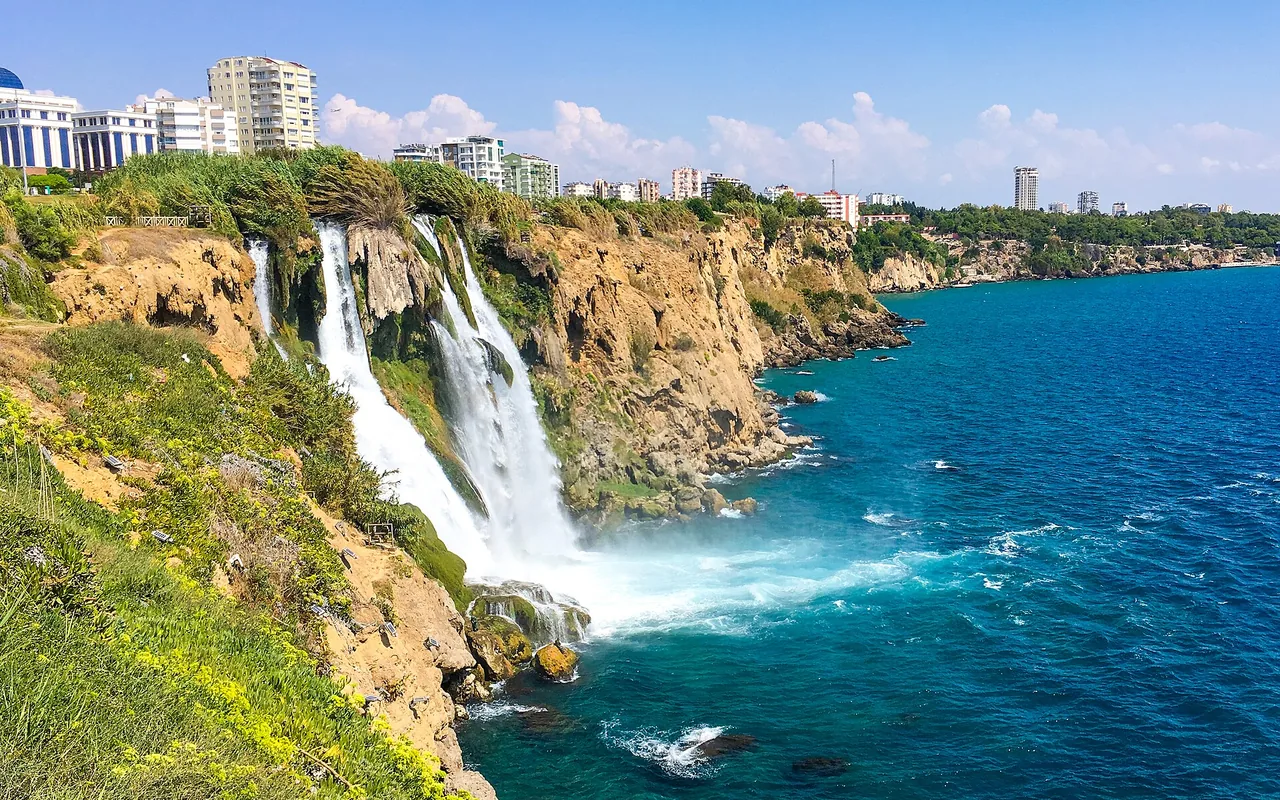
Choose Lower Duden if you want the cliff and sea setting or a shorter coastal stop. The public viewing park does not require buying a boat trip. On a windy day the exposed coast can feel less comfortable than a sheltered street in central Antalya, so keep the visit flexible and combine it with an indoor or sheltered break afterwards.
Will there be more water
Rain and water management can change the appearance of the falls, but winter is not a guarantee of a particular flow. A July 2023 DHA report described a marked reduction between winter conditions and that summer. Those figures should not be treated as a monthly average or a live reading for a later year.
Use current operator information and recent photographs to set expectations, especially if seeing a strong water curtain is your priority. Look at when a photograph was taken rather than only when a review was posted. Our guide uses historical reporting to explain variability; it does not present a live flow meter.
Build a flexible winter day
Begin by checking the forecast and any local weather warnings, then choose the more sheltered or more exposed part of the itinerary accordingly. A dry morning could suit a walk at Upper Duden followed by lunch. A calm afternoon might be enough for Lower Duden and a short coastal stroll. You do not need to commit to both before you have seen the day’s conditions.
Keep a return option that does not depend on a long wait outside. If travelling by bus, save the route and check the return direction before leaving the hotel. If using a taxi or transfer, agree on the pickup point, because the place where a driver drops you off may not be the easiest place to meet again.
- Keep the longer walk for the best weather window
- Leave a dry layer for the return journey
- Treat boat departures as a separate weather-dependent decision
What to wear for the park and coast
A light waterproof layer, comfortable shoes with grip and something warm enough for a pause are more useful than a heavy outfit chosen only for walking. Once you stop moving, wet clothing can feel cold. A compact backpack lets you put a layer away when the sun appears instead of carrying it in your hands.
Take particular care of footwear around Upper Duden’s damp paths and steps. At Lower Duden, a hood can be easier to manage than an umbrella if the wind picks up. Keep your phone and travel documents in a protected pocket. Pack drinking water even when the weather does not feel hot; a winter sightseeing day can still involve substantial walking.
Photographs on a cloudy day
Soft cloud can reduce the hard contrast between bright water and shaded vegetation. At Upper Duden, that may make the difference between the cave and the outside scene easier to handle. At Lower Duden, grey sky and blue-green water give a different mood from the familiar summer postcard.
Work with that atmosphere instead of expecting saturated sunshine. Clean the lens frequently and use a stable stance from an open public viewpoint. Rain droplets on the lens can look like a focus problem. Never leave a marked path or cross a barrier for a better angle, and give other visitors room if you stop with a camera.
Boat trips and shorter daylight
Do not assume that every summer boat schedule continues unchanged in winter. Ask about the actual departure point, the route that will run and the provider’s policy if sea conditions change. A ticket description that mentions swimming or a long coastal cruise may not match what is suitable on your travel date.
Plan the rest of the day around usable daylight and the upper park’s confirmed admission window. A sunset outing to Lower Duden can be pleasant in calm weather, but leave time to return to your transport before conditions become uncomfortable. The best winter plan is usually a small number of well-chosen stops, with the option to shorten the outdoor part without losing the whole day.
Frequently asked questions
Is Duden worth visiting in winter?
It can suit an unhurried park or coastal visit if you plan around the daily weather and current access. Winter rain and wind make flexible timing useful.
Is Antalya warm enough for a winter waterfall visit?
The official long-term January mean is 10.1°C, but that is a climate statistic rather than a daily forecast. Bring suitable layers and check the weather.
Are boat trips guaranteed in winter?
No. Confirm the actual route, departure and weather policy with the operator before booking.
Notes to take with you
- Use the daily forecast as well as climate averages
- Pack a rain layer and shoes with grip
- Check park access and boat departures separately
- Keep an easy return route
Sources and scope
Turkish State Meteorological Service · Antalya climate statistics ↗
T.C. Kültür ve Turizm Bakanlığı · Kültür Portalı ↗
DHA / Daily Sabah · 16 July 2023 ↗
Antalya Tourist Information · Lower Düden ↗
The listed sources support the factual information in this guide. Geographic information does not confirm daily operating conditions. Visit durations are suggestions; check current admission, hours and access separately.